Scroll
The Cellar
The Cellar & The Art of Blending
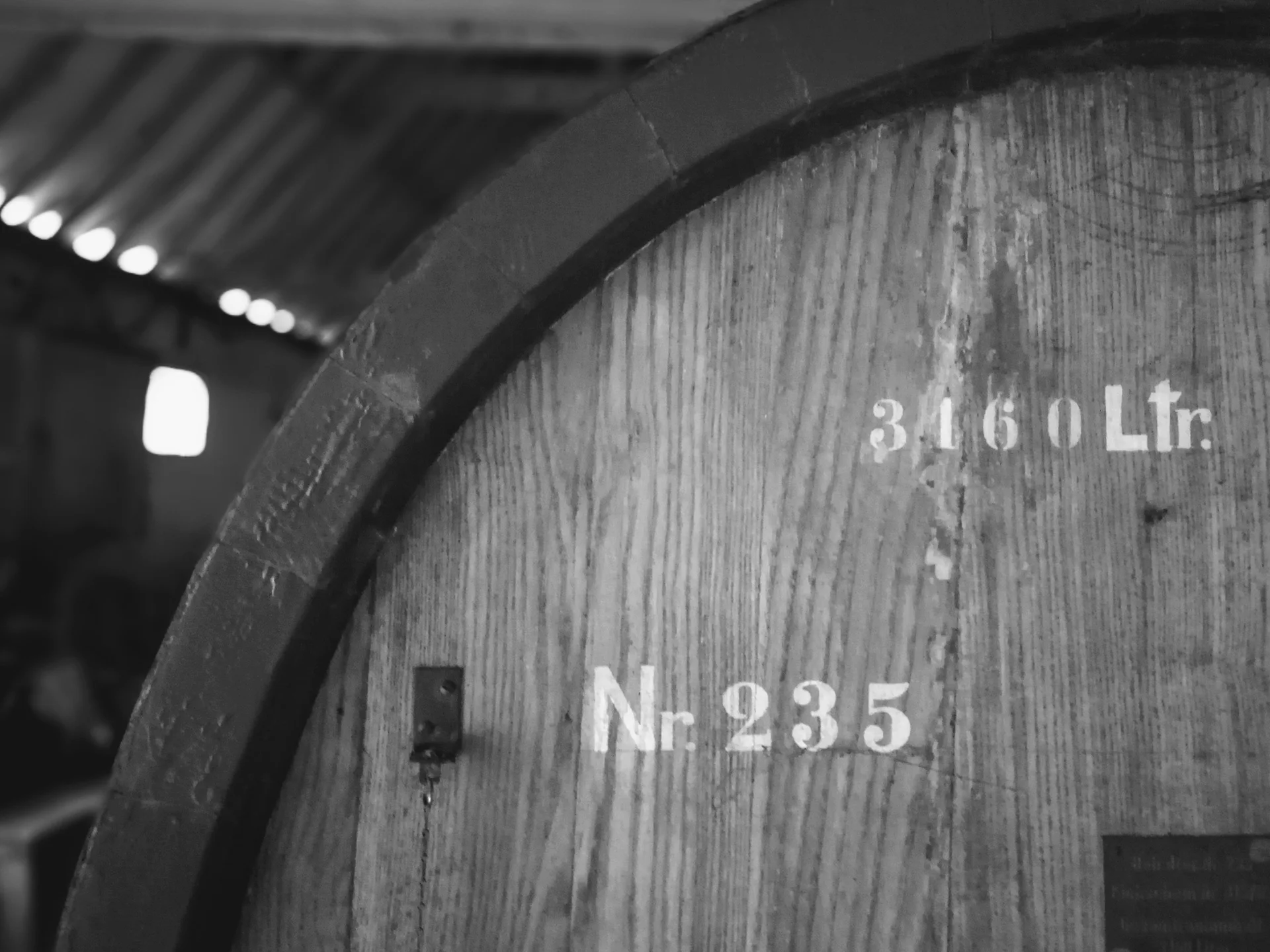
The cellar is where time and wood shape our aged beers.
The cellar is where time and wood shape our aged beers.
In the cellar, everything slows down. After fermentation, the brews move into barrels and time takes over.
Wood isn't just a container. It exchanges, yields and shelters. Over months or years, it lets the air work and houses the wild yeasts and lactic bacteria that make all the complexity of the beer.
Oak adds a little structure: some tannin, a hint of vanilla, that holds the fruit and grain aromas together.
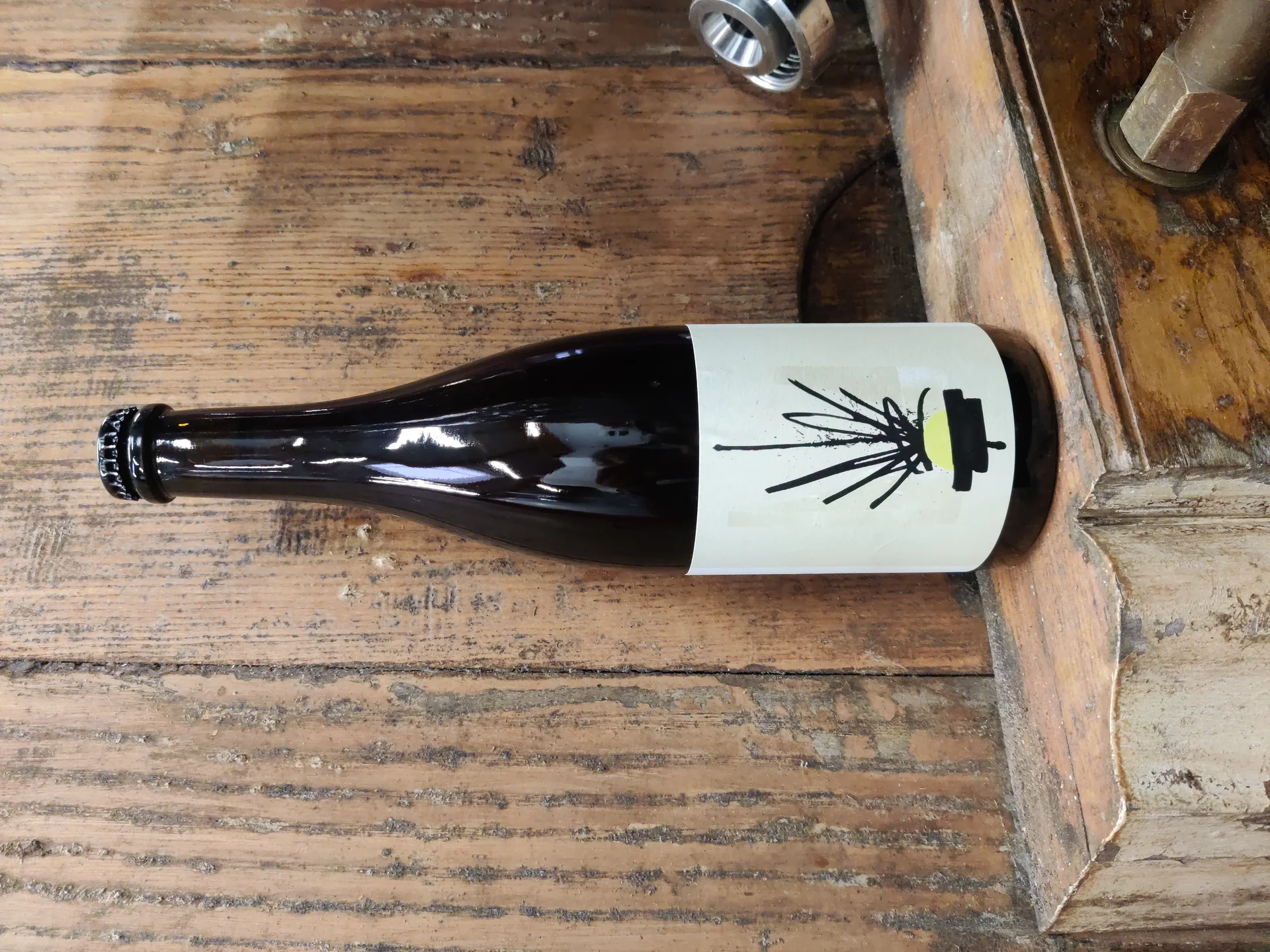
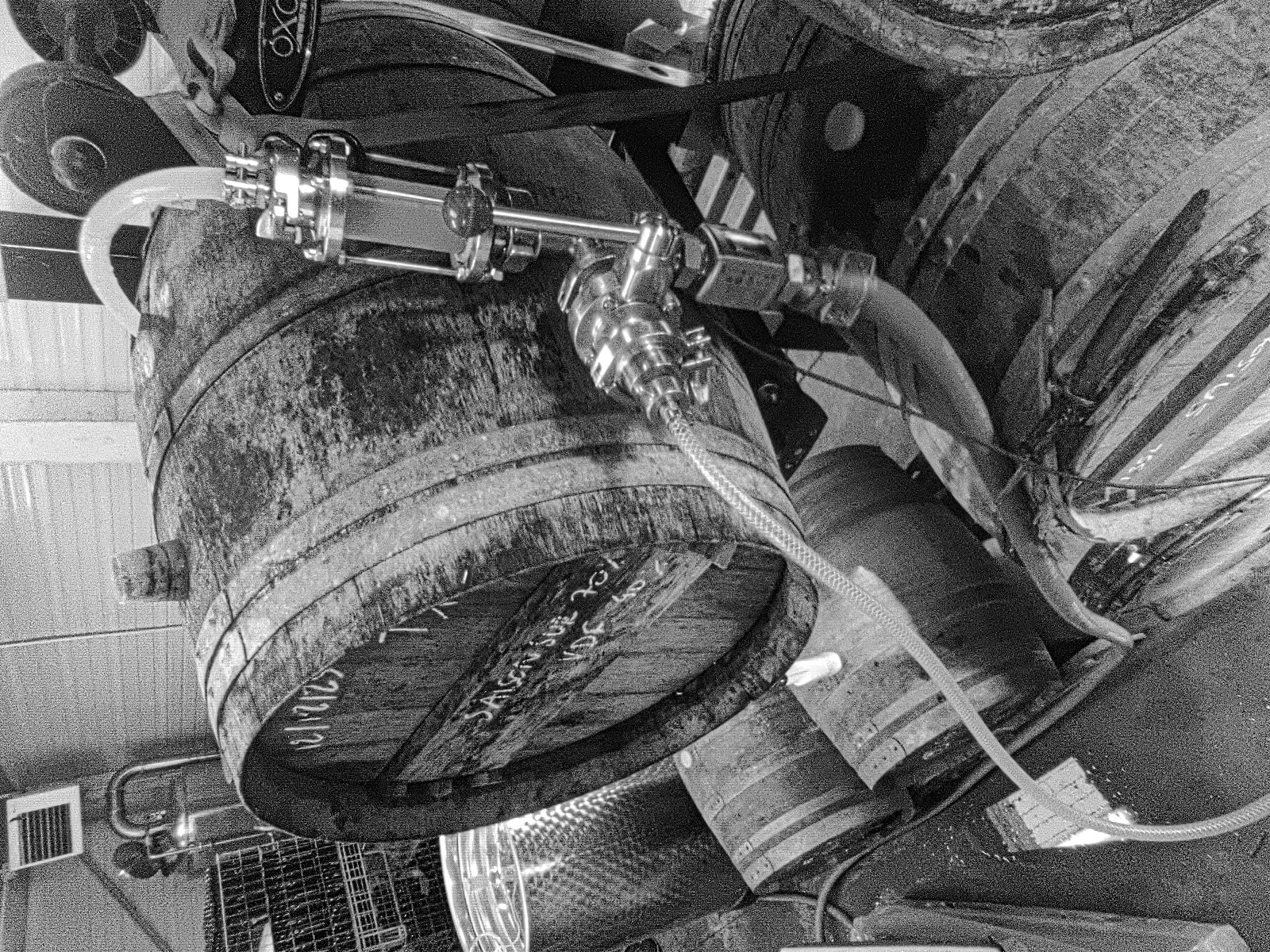
In the Hauts-de-France, this practice has a name: l'apprêt. The Moniteur de la Brasserie put it in 1871: "marrying beers of different ages and characters, in the right quantities and qualities, to always arrive at the same signature of strength and flavour." Every tavern had its own type. Every brewer, their mark.
Echoing that tradition, each season we taste every barrel and blend brews of different ages and characters until the balance feels right.
Beers like the Vieille de Foudre and the Oud Bruin spend long months in wood. What comes out is a fine, persistent acidity and an aromatic depth you can't really get any other way.
In the cellar, we taste, wait and blend. Nature does the rest.